By

Bartok, For Children Vol. I, Play-Along: Post Six (Nos. 31-35 Reaction)

Thanks for your patience in receiving this set of observations.  I’ve fallen down on the job by 2 weeks!  ‘Tis the season for a multitude of piano contests, theory exams, and festivals.  I’m sure you feel the same pain from what seems to be endless preparation…..

It seems like this particular set of five pieces has taken a turn in a different direction.  I noticed some interesting characteristics in Bartok’s writing here which I haven’t observed in the previous pieces.  How about you?  More on this below.

Quick-scan observations about Nos. 31-35:    

  • All pieces are I (Intermediate) level.
  • Continued use of variations form – A A’
  • Melody in the RH mostly.
  • The LH accompaniment has a more extended range now.
  • More frequent use of chords to create a richer texture – either broken chords or 3 or 4-note blocked chords
  • Bartok incorporates more pedaling than before.
  • He continues using 2 mm. and 3 mm. phrases throughout all.
  • Noticeable use of this syncopated rhythmic motif throughout — eighth note, followed by dotted-quarter, followed by half note.

No. 31  – Untitled (Andante tranquillo)

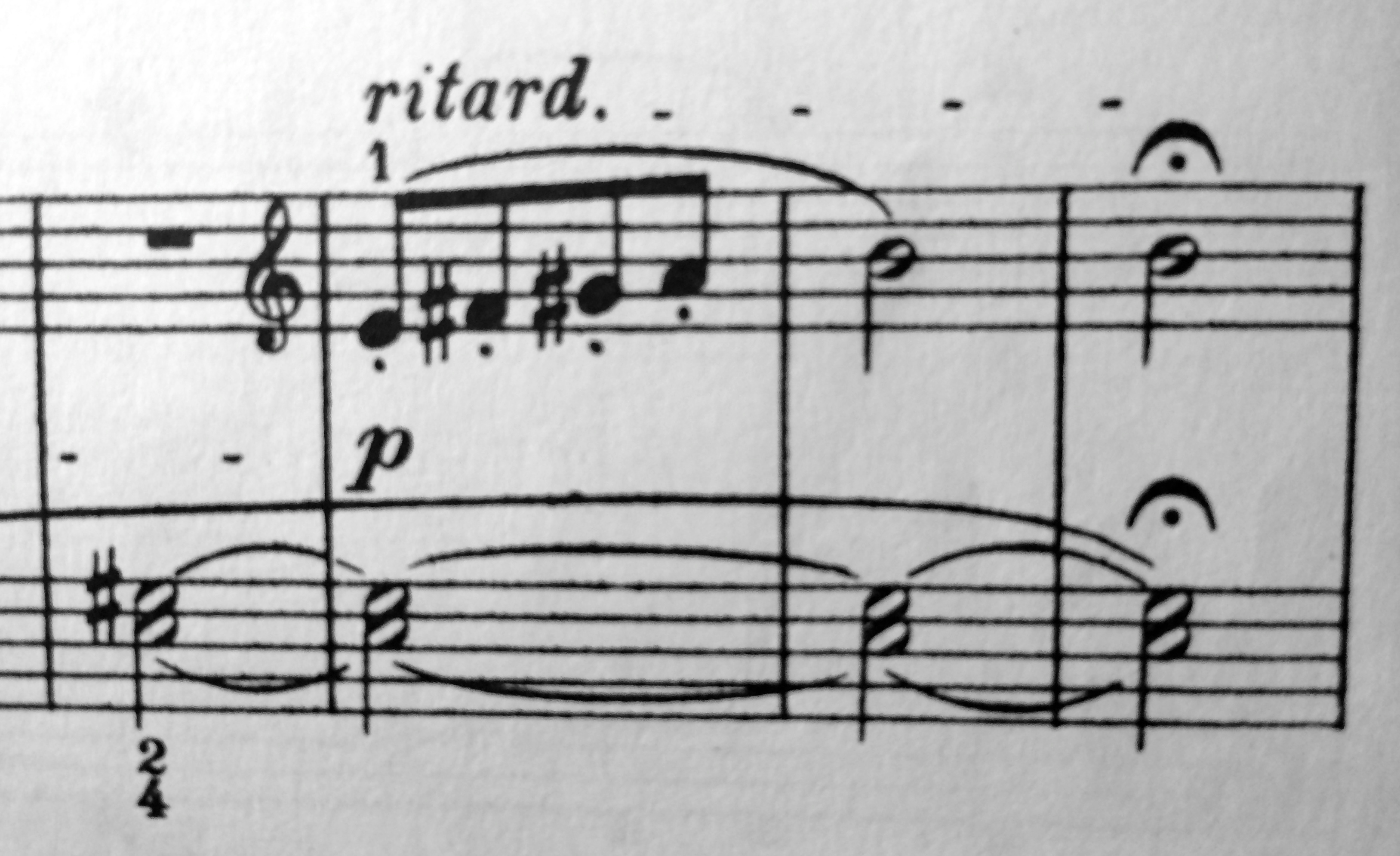
Impressions While Playing:  I returned to this rather haunting, plaintive piece several times to give it more playings, and each time I noticed something new.  It’s the first time in this set that Bartok has used more than 2 flats in the key signature, and also the key of F minor.  The F minor tonality adds a beautiful warm color to the sad melody.  There is definitely a tranquil effect about it as indicated.  I think it’s characterized through Bartok’s simple melody, disjunct phrasing (he uses 3-measure phrases in succession), pedal effects, F minor tonality, thin textures, etc.   It has a quite a Romantic feel which you don’t normally associate with Bartok.

Teaching Value:  This is a great lesson in phrasing for an intermediate student.  The main melodic theme (mm. 1 – 12) consists of 4 short phrases, each 3 mm. in length — 3 + 3 + 3 + 3.  You don’t encounter this phrase structure often.  Did you notice how the melodies in each 3 mm. phrase always end in half notes?

It gives the piece a sense of repose and calm, yet did you notice how each measure of the 3 mm. phrase comes to a stop at the end of the measure creating additional pause?

Despite all of this “stop and start,” a performer must carry the line towards the concluding half notes in the phrases (mm. 3, 6, 9, and 12). This is also a good piece for tonal control.  Notice that most of the piece is rather quiet, with the exception of one “mf” indication in m. 21.

Take Note:  Notice how the LH accompaniment creates a blended harmonic color through the use of broken chords held with the pedal. Bartok tells exactly where he would like you to depress the pedal.  Did you also catch Bartok’s “tie-downs” in the LH?  Each LH arpeggiation begins with a quarter note which must be held down.  If it isn’t held, you don’t hear the sustained effect in the harmony.  He’s so specific about the sounds he would like, isn’t he?

Recommended For:  A more mature intermediate student experienced in varied articulations and pedalling.  And one who knows how to direct a melodic line to a destination.

Correlates To:  Faber Piano Adventures Level 4 or higher (I)

No. 32  – Untitled (Andante ) Scroll to 1:38

Impressions While Playing: You can’t help but immediately notice the wide leaps in the LH – the widest keyboard range of all the pieces thus far.  What makes the leaps even more unusual is the fact that they begin on beats 2 and 4 and work opposite of the RH.  The pedal marks look rather erraticly-placed at times.  Bartok seems to implies that you change the pedal with every double note in the LH – lifting the foot when striking and depressing once the keys are down (syncopated pedaling).  Note that later he changes it to the opposite (see mm.16 -20 for example).  Overall, the pedaling requires some detailed attention here.

Teaching Value:  Besides the pedaling, this is an excellent piece for LH security. NOTE: Keep the LH moving laterally while shifting from high and low.  It’s much more efficient and the tones will remain more calm.   This is especially helpful in keeping its activity lessened during the quieter sections (see the last line).  I also think the wide assortment of dynamic changes (every 2-3 measures!) will certainly keep a student on his/her toes!

Take Note:  Did you happen to catch the harmonic conflict between major and minor in this piece?  You notice it in the opening ( F Major and F minor), but is seems that every time Bartok strongly resolves to F Major (see mm. 12 and 24), he shifts immediately to a minor mode in the next measure.  This piece takes on many harmonic colors.  Notice in m. 13, how the new pedal point in the bass (D), plus the new harmonies, really change the mood of the melody when it is repeated.  And then again, notice how the new pedal point in m. 25 (D-flat) gives the final snippet of the melody an even darker color.

Bartok Observation: So far in several of these pieces, Bartok’s go-to form for a piece is merely a repeat or two repeats of a single melodic theme. However, with each repeat his melody is always harmonized differently, sometimes only in slight subtle ways.  Your ear may not completely catch the difference upon a first listen to a recording, but if you play it you’ll definitely notice!

Recommended For:  A student who is already adept with the pedal,  and one who can dramatize the melancholic mood of this work.

Correlates To:  Faber Piano Adventures Mid – Level 4 or higher (I)

No. 33  – Untitled (Allegro non troppo) Scroll to 3:05


Impressions While Playing: This is one of the more well-known pieces from the latter part of Vol. I and odd as it is, students are drawn to it.   I played this as a child and recall how much I loved to play it over and over again.  I recall liking the wonky, gymnastic feel of the LH leaps in the opening theme and the contrast of the quiet B theme with the hands closer together (see m. 5).  But the inconclusive harmonies really catch your ear as well.  In which key is this piece, really?  I like how Bartok leaves you hanging on a PPP solitary E at the end…..huh?

Teaching Value:  The LH leaps are a perfect opportunity to practice stride-piano technique for sure.  Note how Bartok specifies accents only on the low notes.  I can already predict how students may play the chords too loudly, or worse yet, have a difficult time playing the chords on target.  Be sure to move the LH laterally from low to high rather than in an arc.  The closest distance to a target is via a straight line, right?

Take Note:  Technically this piece is only 10 measures long, correct?  The first 10 measures just repeat themselves with a different harmonization in the LH.  Easy, right?  But….learning and memorizing the two different LH accompaniments might be a little troublesome for some students since they are quite different even if mostly on the white keys.  Separating and learning the 2 different bass lines in a linear fashion should help.

Recommended For:  A student who has already had a little experience with a jumping LH accompaniment and who enjoys pieces with a gymnastic bent.

Correlates To:  Faber Piano Adventures Mid – Level 4 or higher (I)

No. 34  – Untitled (Allegretto)  Scroll to 3:56

Impressions While Playing: The opening two measures of this piece sound quite romantic in character, don’t they?  Then in m. 3, we’re back to rhythmic Bartok with vertical, strident chords played in a proclamatory style.  Though Bartok doesn’t indicate pedal, it sounds as if Mr. Jando does employ it in the recording above. I like the added, undetecteable pedaling for added resonance in this section.  The form consists of a simple A + B + A + B + A phrase grouping that is so brief it sounds like a mere introduction (hence the attacca into No. 35).

Teaching Value:  A great opportunity for double-note playing in both hands.  Sometimes the texture is 4-part and at times, 5-part.  Compare mm. 3-4 with 6-7 to notice again the subtle changes Bartok makes when repeating a melody, both in texture and harmony.  I would certainly discuss with a student how the piece shifts from a G minor opening to a feeling of E-flat major (m. 8) and then a slight resolution to E-flat minor (m. 13), only to return to G minor.  A singing soprano line in the upper fingers of the RH is a must.

Take Note:  Did you catch Bartok’s use of wide leaps in the LH here as well?  And similar to No. 32 he seems to have a penchant for this rhythm pattern:  eighth note, followed by dotted-quarter, followed by half note.

Recommended For:  A student with previous experience in 4-part texture and the ability to voice a soprano line quite clearly.

Correlates To:  Faber Piano Adventures Mid – Level 4 or higher (I)

No. 35  – Untitled (Con moto) Scroll to 4:32

Impressions While Playing:  The tempo moves along here after the attacca and Bartok retains the Key of G minor.  Again another brief piece in A + B (extended) + A + B + A form, but this time the more “romantic” theme is the B theme (mm. 3 – 9, then mm. 12-15).  The A and B themes are quite different in character from each other similar to No. 34 above, and also like No. 34, this piece ends with a poco rall. followed by two measures of a tempo which moves directly into the next attacca.Teaching Value:  If I were teaching this, I would definitely teach Nos. 34, 35, and 36 as a complete set.  It doesn’t make sense to isolate these movements.  In fact, as of this writing, I am teaching No. 36 to an intermediate student.  He loved the idea of an attacca and instantly asked to do all three after hearing them played one after the other.  I think their brevity was a plus.  Three one-page pieces for an intermediate student isn’t much to ask.

Take Note:  You can’t help but notice how the B theme (the more “romantic” theme with pedal – see m. 3) is written in 3/4 time.  This adds a nice sweeping lilt to the piece after such a straightforward, rhythmic opening.  A great opportunity to teach expressive phrasing here. Again, note the LH.  The wide leaps from before have returned.  The deep bass notes and expanded range between the hands add great depth and resonance which we haven’t seen in previous pieces

Recommended For:  A student with capricious flair who can mingle whimsy with grandeur.Correlates To:  Faber Piano Adventures Mid – Level 4 or higher (I)

* I enjoyed Mr. Jeno Jando’s interpretation of these 5 pieces in the videos above.  Tasteful and poignant in his expression.  

I look forward to teaching Nos. 34, 35, and 36 as a complete set over the next couple of months.  I’ll update this post with more explicit findings as the student progresses.
By

Indispensables of Piano Teaching #4 – Interlocking Plastic Keyboard

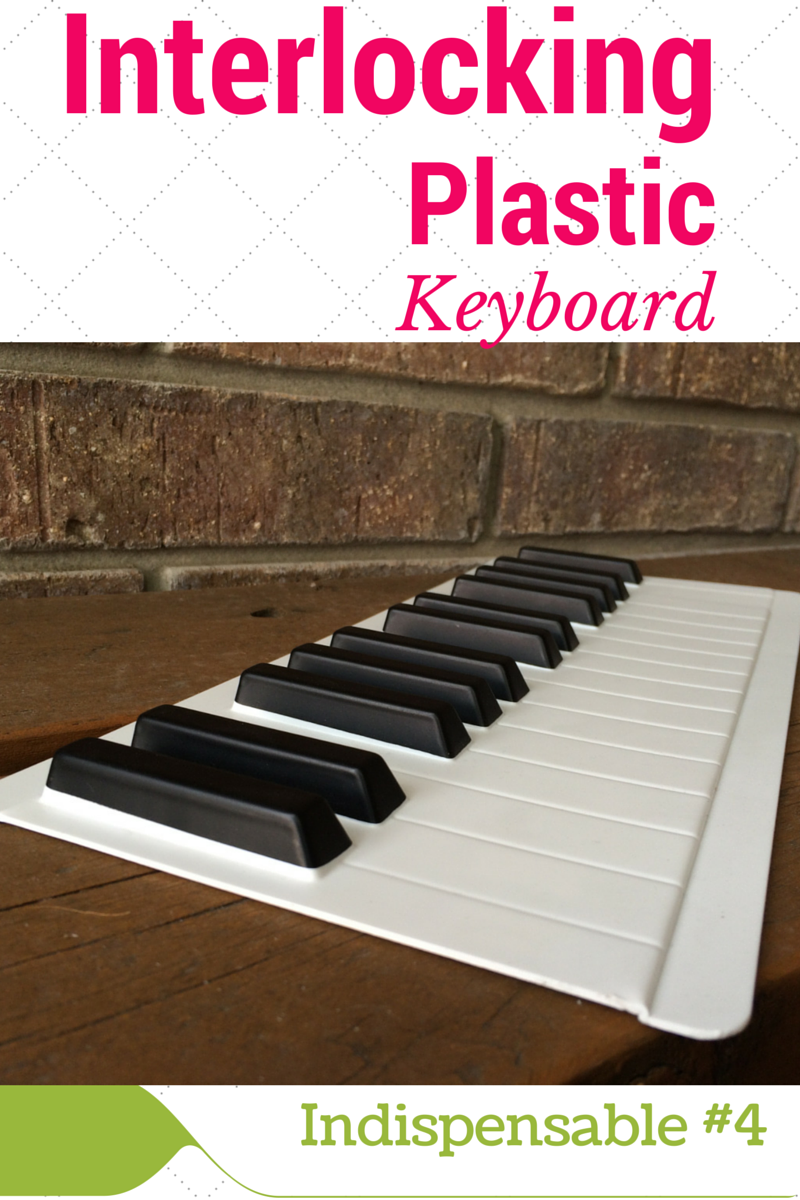
Interlocking Plastic Keyboard
Here’s an oldie, but a goldie tool for studio teaching, especially if you teach in groups once in a while.  I recall using these in group theory classes when I was child.  How’s that for dating this item? and myself….

#4 – PLASTIC INTERLOCKING KEYBOARD

I didn’t really think I’d have a need for these in my private piano studio since I have 2 pianos in the studio, several flat laminated keyboards, a floor keyboard, and even a fabric keyboard, but this plastic dimensional keyboard has really come in handy.

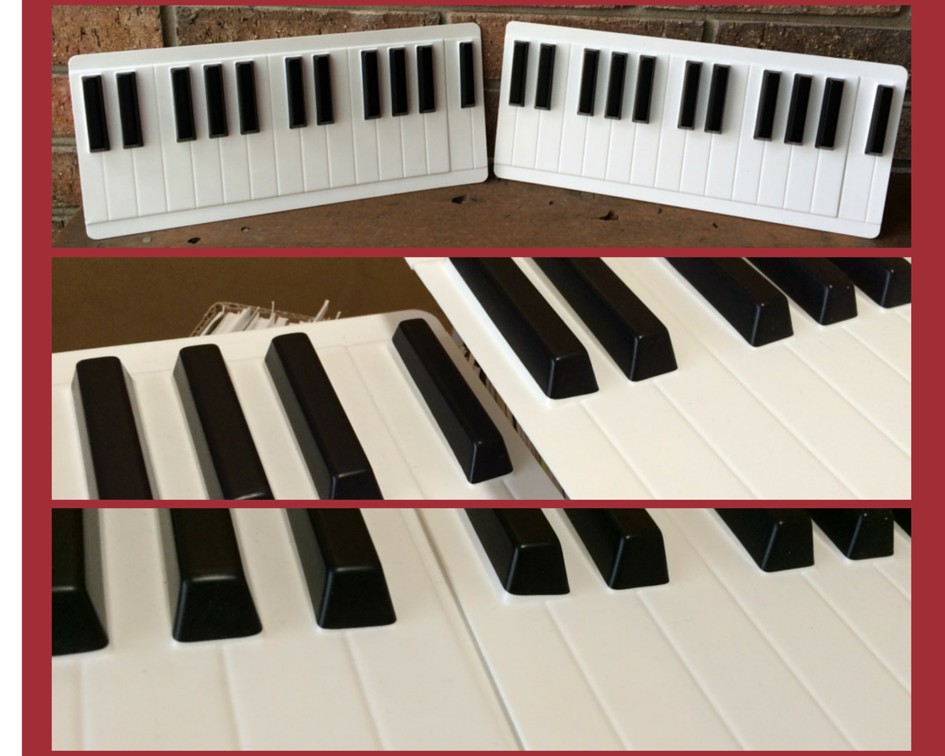
This interlocking keyboard features full-sized white and raised black keys. Each two-octave keyboard can be interlocked to make a longer keyboard.

Here’s a close-up of how two interlock: Interlocking keyboards copy

I occasionally take this little keyboard with me to piano teacher workshops especially when I know there won’t be a projected view of the piano keyboard on an overhead screen. I just hold this up in the air for all in the audience to see as I demo a maneuver with my opposite hand.  Of course it goes without saying that these are great for any sort of group teaching you might do when there’s just not enough keyboards to go around.  They are light and sturdy, and they store easily too.

Here’s a few photos of how I’ve used them:

IMG_0896

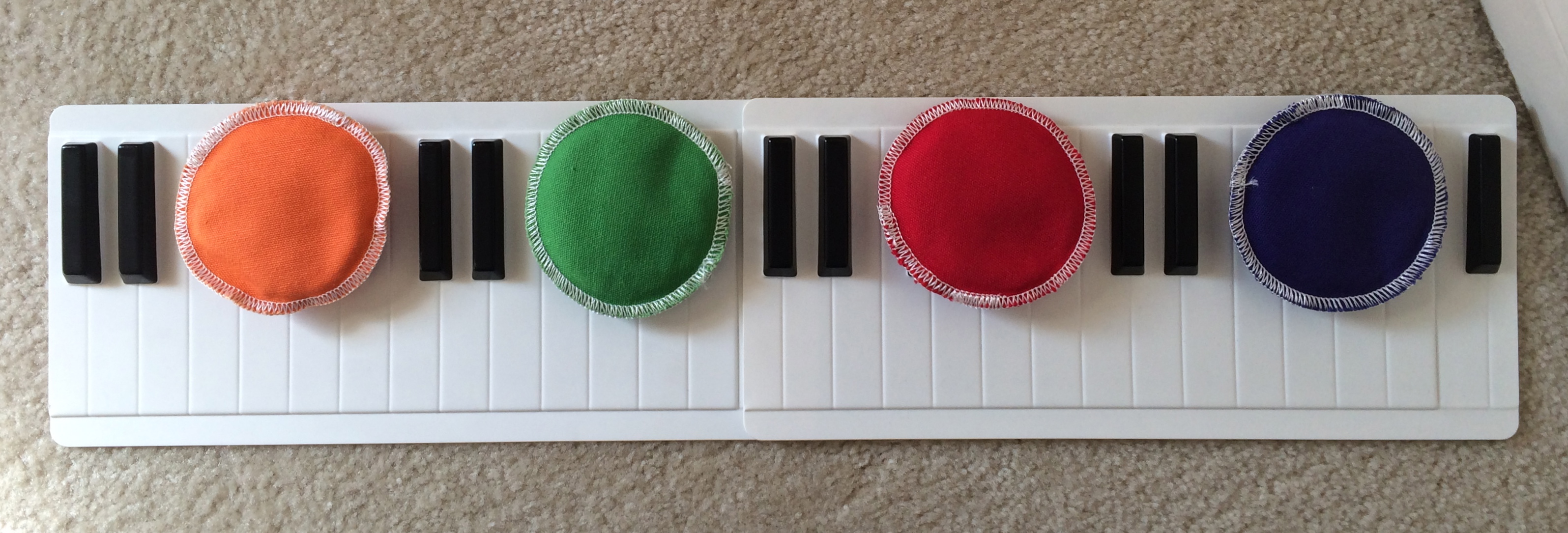
I.D. of black-key groups

IMG_0897

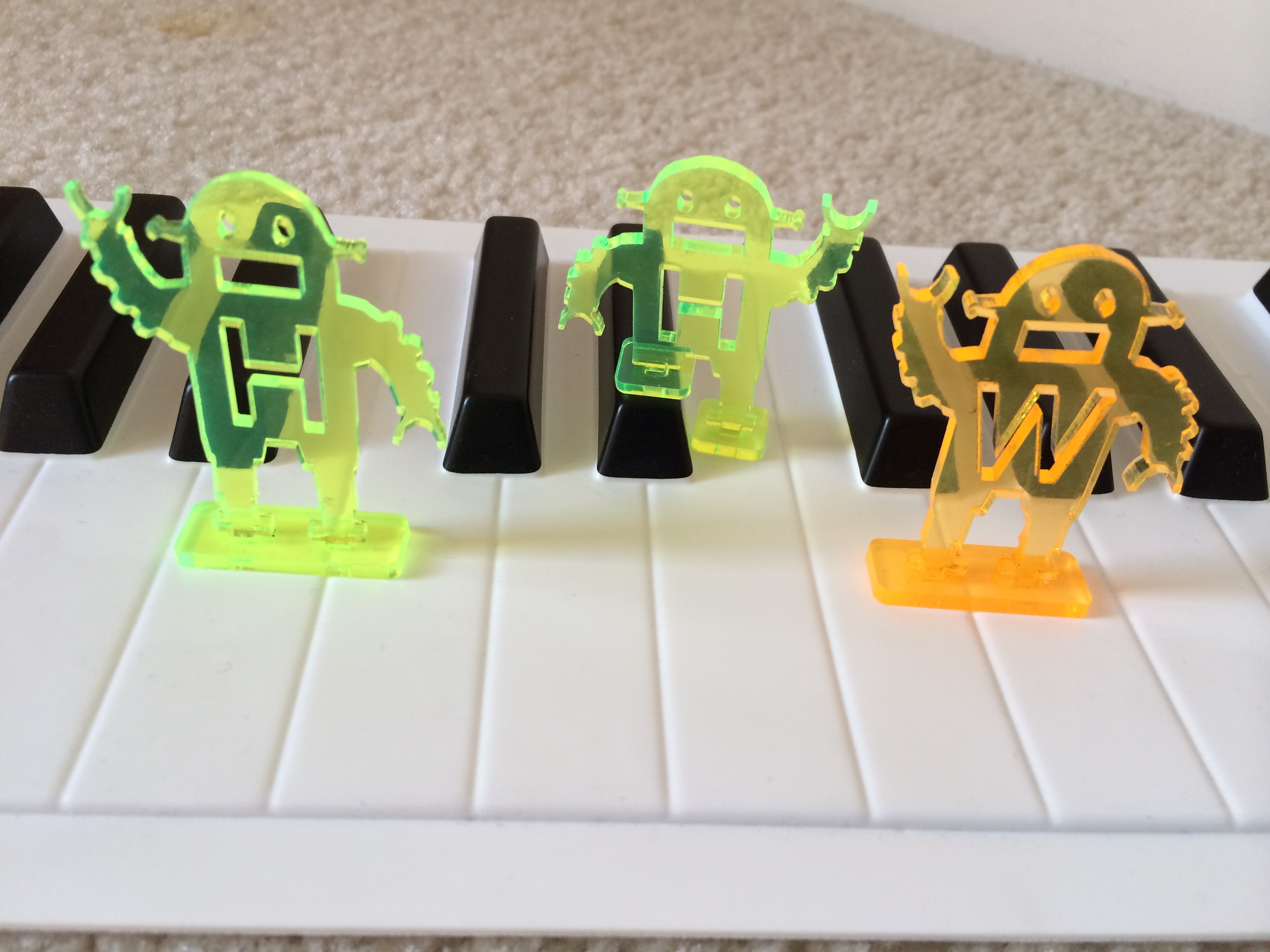
I.D. of Half and Whole Steps using Susan Paradis’ clever Robosteps

IMG_0909

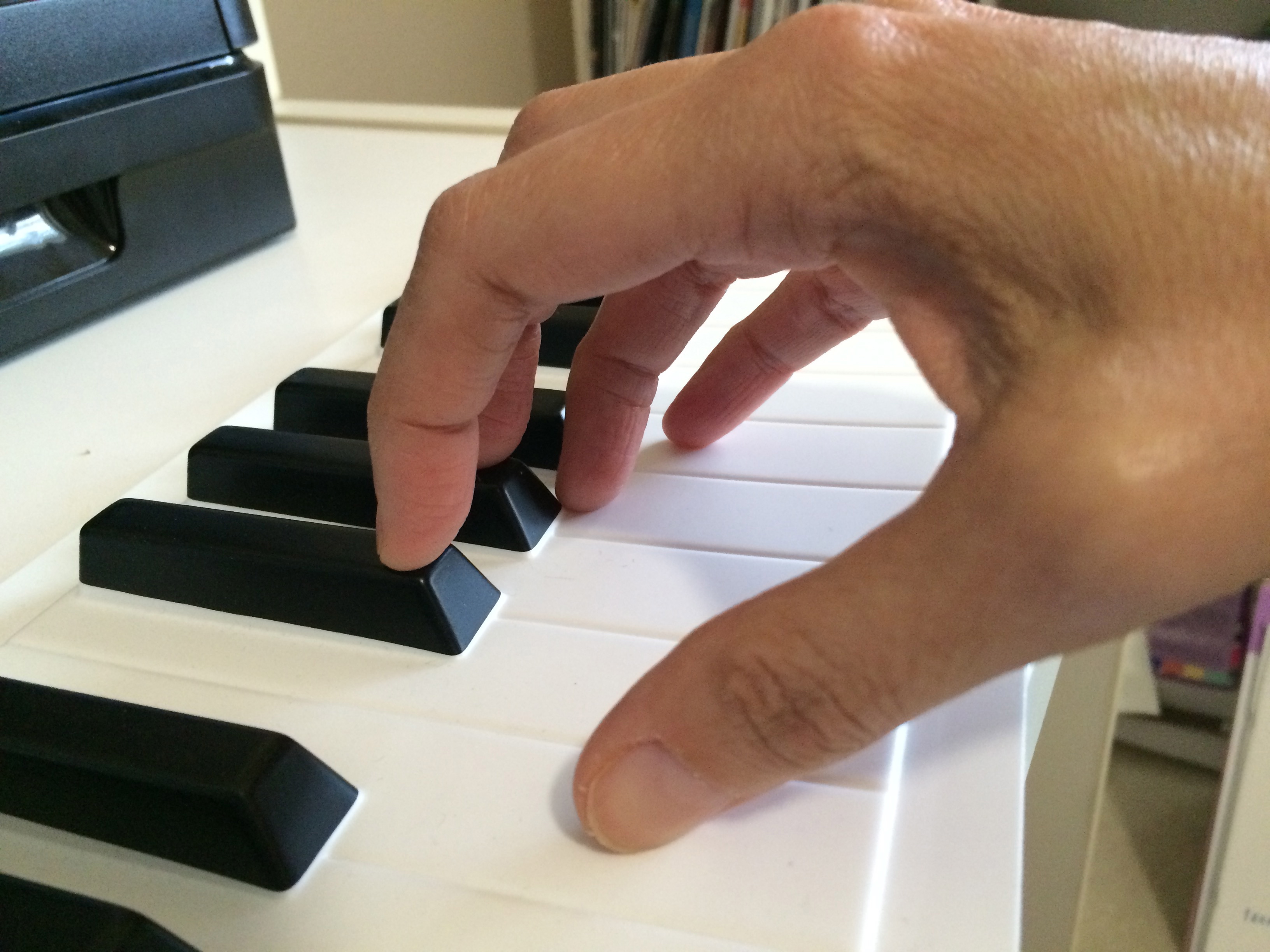
Excellent silent-practice keyboard while at the dining room table waiting for your lesson!

The possibilities are endless….

BEST PRICE:  $9.95 at Valentine’s House of Music in Houston, TX.   Amazon or other online retailers in my Google search couldn’t beat Rick Valentine’s price. I don’t see it listed on Valentine’s website at this writing, but you can call (713) 868-7447 to order.  He says he has plenty available. Rick is incredibly helpful and knowledgeable about educational piano music and keeps his shipping affordable for piano teachers (free shipping on all orders over $50).  Certainly try your local sheet music retailer first.  They may be able to order them for you.

If you’ve used these keyboards in your teaching, please comment and share your ideas!

By

Indispensables of Piano Teaching #3 – Online Music Teacher Directory Service

Online MT Directory

#3 – ONLINE MUSIC TEACHER DIRECTORY SERVICE
Every music teacher’s studio needs some type of web presence these days. An online music teacher directory is a key tool if you want to maintain a steady flow of interested prospects headed in your direction.  And of course if you’re new to an area, this is definitely an indispensable!  Plain and simple — people interested in musical education need a way to find you and online directories work for you 24/7. Read More

By

MusicEdConnect.com starts tomorrow!

MEC Vertical

MusicEdConnect.com starts tomorrow, WED., Feb. 4! Join the live sessions February 4-7, 2015 for $129 or purchase only the replay pass for $99 to access sessions on-demand at a later time.  You won’t want to miss the 15 fabulous presenters including:  Scott McBride Smith, Jennifer Foxx, Fred Karpoff, Leila Viss, and others, who will share inspiring ideas and techniques. If you attend LIVE, you can interact with the presenters and other attendees.

I am honored to be presenting among these talented people.  My session, “The Trouble with Transfers: Tips for Transitioning without Tears or Fears” will be tomorrow, WED. Feb. 4, at 1:00 Central Time.

There’s even a virtual exhibit hall!  Your conference book will contain additional freebies, codes and coupons from these exhibitors.  Click HERE and scroll down for the Exhibit Hall Preview.

REGISTER HERE!

Hope to see you there!


By

Indispensables of Piano Teaching #1 – Highlighter Tape

Indispensable_  TAPE
Welcome to the new weekly series “Indispensables of Piano Teaching.”  Like me you probably have several teaching manipulatives, tools, gadgets, or maybe a reference book that you always find yourself reaching for during lessons.   I’ll be sharing one of my “can’t do without” items each week here on the blog for the next several weeks (not games or a specific activity, but an actual tool or gadget that I can’t do without). Please comment if you use any of the same tools and don’t hesitate to tell us how you use them in your studio.   And maybe later I’ll highlight one of your favorite tools!

#1 – COLORED HIGHLIGHTER TAPE

I have found more uses for this tape than I could have realized!  It’s fantastic for highlighting troublesome spots in a student’s music.  You can write on it, see through it, remove it when a problem is corrected, and then reuse it!  Students love the colors (pink, green, blue, yellow, red or purple) and I find it the MOST useful in guiding their home practice.   Read More

By

Bartok, For Children Vol. I, Play-Along: Post Four (Nos. 21 – 25 Reaction)

This was an interesting set.  I noticed some characteristics that I haven’t seen or heard before in the previous selections.  Disclaimer:  Please know that I do my best to find the better YouTube renderings of the pieces from this volume.  I often don’t have much of a selection to choose from and must default to whatever I consider the best available at the time. 

Quick-scan observations about Nos. 21-25 :    

  • All pieces are EI to I (Early Intermediate to Intermediate)  in level.
  • Several of the same musical characteristics from his earlier pieces are evident here, but some of these seemed a little more unusual in tonality, tempo, or structure.
  • There is more LH involvement in this set of pieces.
No. 21  – Untitled (Allegro robusto)

Scroll to 1:29 in this video:

Impressions While Playing:  It sounds and feels “robust,” doesn’t it?  It certainly packs a punch in such a short amount of time.  Read More

By

Don’t Miss It! MusicEdConnect.com

MEC GraphicFEBRUARY 4 – 7, 2015

For the second year, 15 nationally-known presenters are all coming together, in a powerful LIVE online event, focused on one thing – getting you inspired and motivated for teaching in 2015!

The MusicEdConnect ONLINE national conference is hosted by Michelle Sisler and her team from Keys to the Imagination and she has gathered a top-tier list of experts that include Scott McBride Smith,  Leila Viss,  Jennifer Fox, Fred Karpoff and more!

How Do You Participate?  Register HERE and then VIEW LIVE on Feb. 4-7 from the comfort of your own computer or mobile device.  If you can’t make it, you get to view later on your own time (thru Dec. 31, 2015)

Any Other Benefits?  No travel expenses!  Network with other teachers around the world.  Visit exhibits. See new products. Take advantage of conference-only specials.

Cost?  Less than $130, depending on which option you choose.

COUPON CODE!  PCPT blog followers receive a $10 discount on registration NOW thru Friday, Jan. 23 at midnight! Just use coupon code: “EG1” at registration.

IMG_0678

SAVE $20 BY DOING THIS…..BEFORE MIDNIGHT on TUESDAY, Jan. 20!  Head over to INSTAGRAM on your mobile phone or tablet and FOLLOW me, Elizabeth Gutierrez.  Enter “@pianoprof” in the search box and you’ll find me.  Click on “Follow” and then click on the photo of the MusicEdConnect event to view your $20 discount code!  Give me a shout-out (comment) when you get there, OK?

NEW TO INSTAGRAM ? This LINK will tell you more about IG and what makes it so interesting as a social media tool.  You can download the app for FREE at the App Store.

SEE YOU at MusicEdConnect.com!


By

Bartok, For Children Vol. I, Play-Along: Post Three (Nos. 16 – 20 Reaction)

We’re back in action!  If you haven’t started the Bartok Play-Along as of this date (Jan. 16, 2015) – no worries!  You may certainly start here OR start studying/playing the pieces from the beginning post and work your way to this point. Please always play along at your own pace and be sure to ADD COMMENTS or ask a question about any Bartok blog post ANYTIME.  I’d LOVE to hear what your thoughts are regarding these VERY interesting gems!  

Quick-scan observations about Nos. 16-20 :    

  • These pieces are solidly EI to I (Early Intermediate to Intermediate)  in level at this point in the collection.
  • Part-writing (2 or more voices in one hand) adds to the complication.
  • Bartok continues to use a variety of tempos, simple meters, and simpler key areas in major and minor, and other modes as well.  A dash of chromaticism adds color.
  • He continues to indicate sophisticated fingering and pedaling markings to achieve an intended effect like sostenuto, legato, and so forth.
  • All 5 pieces utilize a good range of the keyboard with the hands usually an 8ve apart and at times, 2 8ves apart.
  • Bartok is quite specific about sound.  Heavy use of dynamics here,  including hairpin cresc. and dim. effects.
  • Notice the use of repeated notes in these 5 pieces, especially at the ends of phrases. Interesting.

No. 16  – Old Hungarian Tune

Impressions While Playing:  Sounds like a chant, don’t you think? The use of repeated notes and short phrases lend to that feeling.  Certainly it’s a Hungarian melody of some sort given the title, but I’m not sure if it’s a folk song (vocal) or folk tune (instrumental).  The 4-voice choral texture makes it less “pianistic” than some of the previous pieces in the set.

Teaching Value:  This would not be one of my “go-to” Bartok pieces for student performance, but it would make an excellent piece for sight reading (4 voices at once).  I hear a mix of modes here which would make it less predictable for the student who is reading the piece. Read More

By

Happy Holidays! and Update

Many apologies for not posting in almost 2 months!  I know many of you have been wondering what happened to our Bartok Play-Along.  GOOD NEWS! – it will resume the first week of January 2015 and I promise, we will indeed finish the entire set!  🙂

So where have I been?  Well….an opportunity to create some new piano materials arose and I’ve been busy writing and arranging like mad.  I am pleased to announce that I am editing and arranging piano publications for a new digital piano publishing firm , Piano Passport. There is so much coming up in 2015 that I’m ready to bust my buttons!

* View the first 4 Piano Passport publications here and read about the focus of the company:  www.pianopassport.com

* Please LIKE the Piano Passport Facebook page here, and share, share, share!:  www.facebook.com/pianopassport

* And sign up for the Piano Passport email list here.  There will be discount opportunities for subscribers.  Emails will not be shared.:


Many of you may know I’ve been an avid researcher and proponent for Latin American piano music.  Here is one of my discoveries from Brazil that is now in print via Piano Passport.  It will lift your spirits and start your toes tapping.  It’s not nearly as difficult as it sounds.  My students at the high-school level have really enjoyed it. Great rhythmic training and students never tire of it.  Enjoy!

Tango Brasileiro by Alexandre Levy

Wishing you a MERRY CHRISTMAS, HAPPY HANUKKAH, and a joyous NEW YEAR filled with beautiful music!

By

Bartok, For Children Vol. I, Play-Along: Post Four (Nos. 11- 15 Reaction)

A new approach to presenting these pieces to you…. so if you’ve haven’t had a chance yet to play through these 5, you should get a good sense of what they’re all about by first listening to the video and then reviewing my reactions.  Enjoy, and let me hear your thoughts!

Quick scan thoughts:    

  •  Bartok continues to present varied tempos in these pieces and within a single piece as well.  I would classify Nos. 11,  14, 15 as late elementary in level and Nos. 12, 13 as early intermediate, taking into account tempo, coordination of the hands, detailed articulation, and especially the maturity required for expression.
  • 4 out of the 5 key areas are centered on “D,”  with the tonality being either D Major or d minor.
  • I notice “attaca” on Nos. 13 and 14.  Perhaps Bartok intended Nos. 13,14, and 15 to be performed as as set?  It would work well.
  • All the pieces are less than a minute in length, except for no. 12.  He is a master at saying a great deal in such a short amount of time.
  • Bartok continues to create much nuance and inflection through his highly specific use of dynamics, articulation, and tempi.

No. 11  – Untitled (“Lento”)

The Expressive Idea:  Sweet, tender melodic playing in a highly expressive manner.

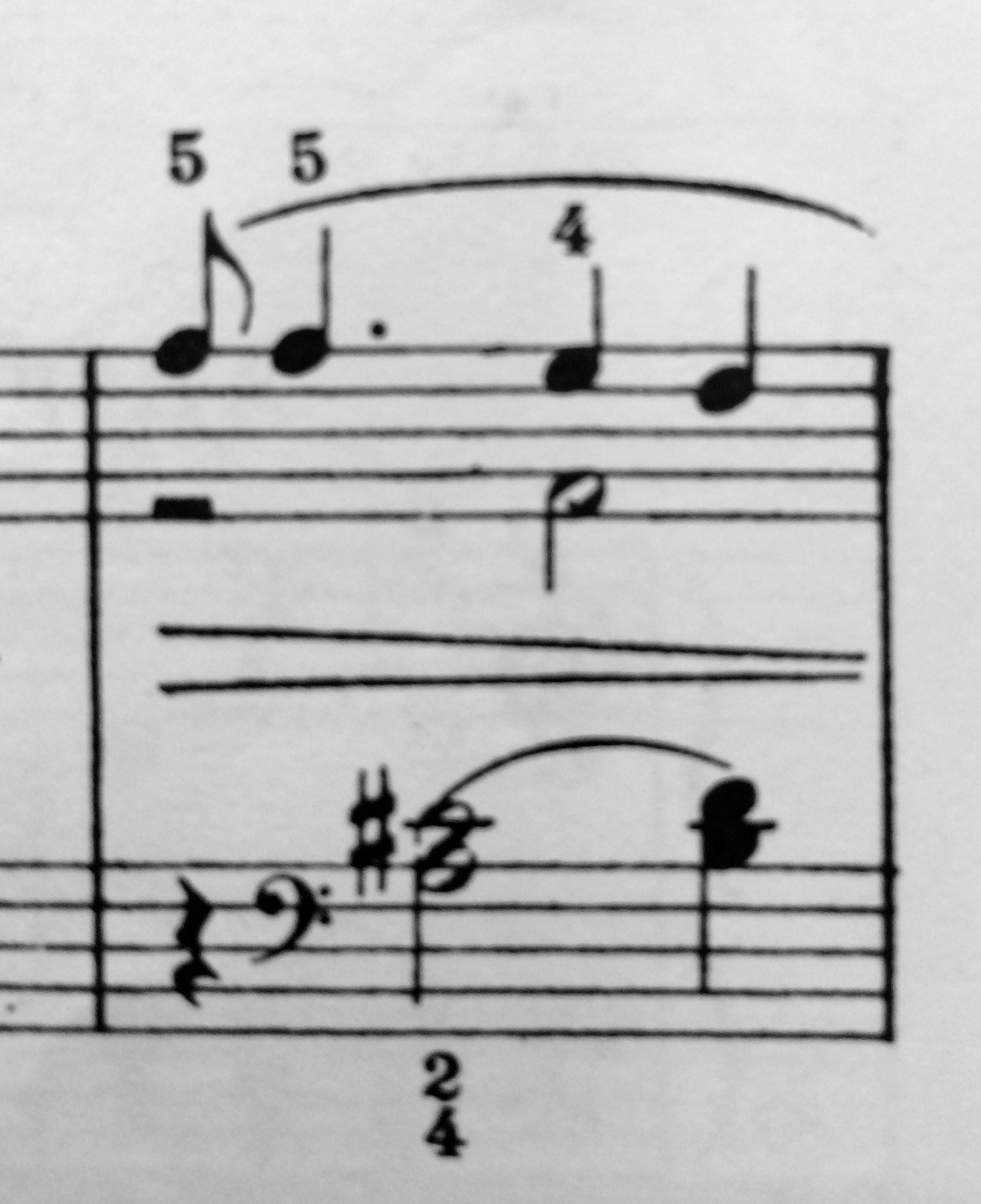
Technical Challenges:  A student should already be familiar with the execution of part-writing in the LH (2 or more voices in the hand).  In this case, there are “tie-downs” as pictured here:

IMG_0781

Measures 9 thru 11

Playing doubled-notes legato is also required.  This is a great lesson in evocative playing and both hands get the chance to do this.  The melodies must be shaped quite expressively for a convincing performance.  Besides the hairpin cresc./dim. markings, notice the Bartok’s use of espr. and molto espr. 

Unique Aspect:  I love how Bartok incorporates a fragmented version of his main theme as his closing theme. Very clever and effective! The PP dynamic at the slower tempo will require some control.  Notice Bartok’s specific use of the pedal at the end to inform the performer of the importance of connecting the chords.

Correlated To:  Faber Piano Adventures, mid-to-late 2B to Early 3A, but keep in mind the LH stretches and LH legato technique required.

No. 12  – Untitled (“Allegro”)

Enjoy this beautiful recording of Geza Anda performing this piece (Sold!)

The Expressive Idea:  Very child-like melodic theme.  In stances like these, I ask students to describe the scene or mood implied by the innocent sound of the theme, especially as it travels here to the lower register.

Technical Challenges: The broken-chord accompaniment in both hands is unusual.  Requires strength and agility in the 4th and 5th fingers of LH and rotation technique here is a must!  In m. 28, my preference is fingers 5 and 3 for beat 1 rather than 3 and 2.  Keeping this accompaniment consistently controlled and quieter than the melody will take some work.  And I wonder why Mr. Anda leaves out the pedalling that Bartok indicated.  Personally, I think it supports the cresc. effect and creates good contrast.

Unique Aspect:  In mm. 24- 27 and again in mm. 52-56 it seems as if Bartok might modulate, yet he reverts both times to C Major.  Interesting…

Measures 25- 27

Measures 25- 27

Correlated To:  Faber Piano Adventures, Level 3B or later due to the intricate finger work and opposing articulations.

No. 13  – Ballad

The Expressive Idea:  The only one of the 5 pieces with a title.  So I would ask the student in this case:  “What’s the story all about?”  Note how Bartok uses espr. markings with the melodies in both the RH and LH.  I often tell students that this is a clear clue that the narrator in this ballad is really trying to get a point across to the listener.

Technical Challenges:

  • RH control of long notes which must be played in a hushed, sustained manner.
  • Smaller hands may have trouble playing the RH of m. 12  Use pedal between the notes if needed:

    R.H. stretch in m. 12

    R.H. stretch in m. 12

  • In m. 16, play the rolled chords slowly and gently.  In the video above, you’ll hear how they sound clipped and abrupt when played too fast.

Unique Aspect:  Bartok can sure say a lot in such a short time.  Through his clever use of harmonies, you might never realize that this piece is a mere eight-measure melody repeated once.  Note his use of “attaca” at the end and no double bar.  He intended this to move right into No. 14, which is also in the key of D minor.

Correlated To:  Faber Piano Adventures, Level 3B or later; the student should be familiar with syncopated rhythms, part-writing texture, and thumb tucks,

No. 14  – Untitled (Allegretto)

The Expressive Idea:  A rather quirky piece with its fragmented melodic ideas.  It has an insistent quality as each idea is expressed more loudly than the previous.  And then it becomes calm again. I can see how this might serve as a link between two other short pieces (see “attaca” at the last measure).

Technical Challenges:  Special attention must be given to the expression and timing of this piece in all its quirkiness.  What exactly is being expressed? The dynamics and articulation are especially revealing.

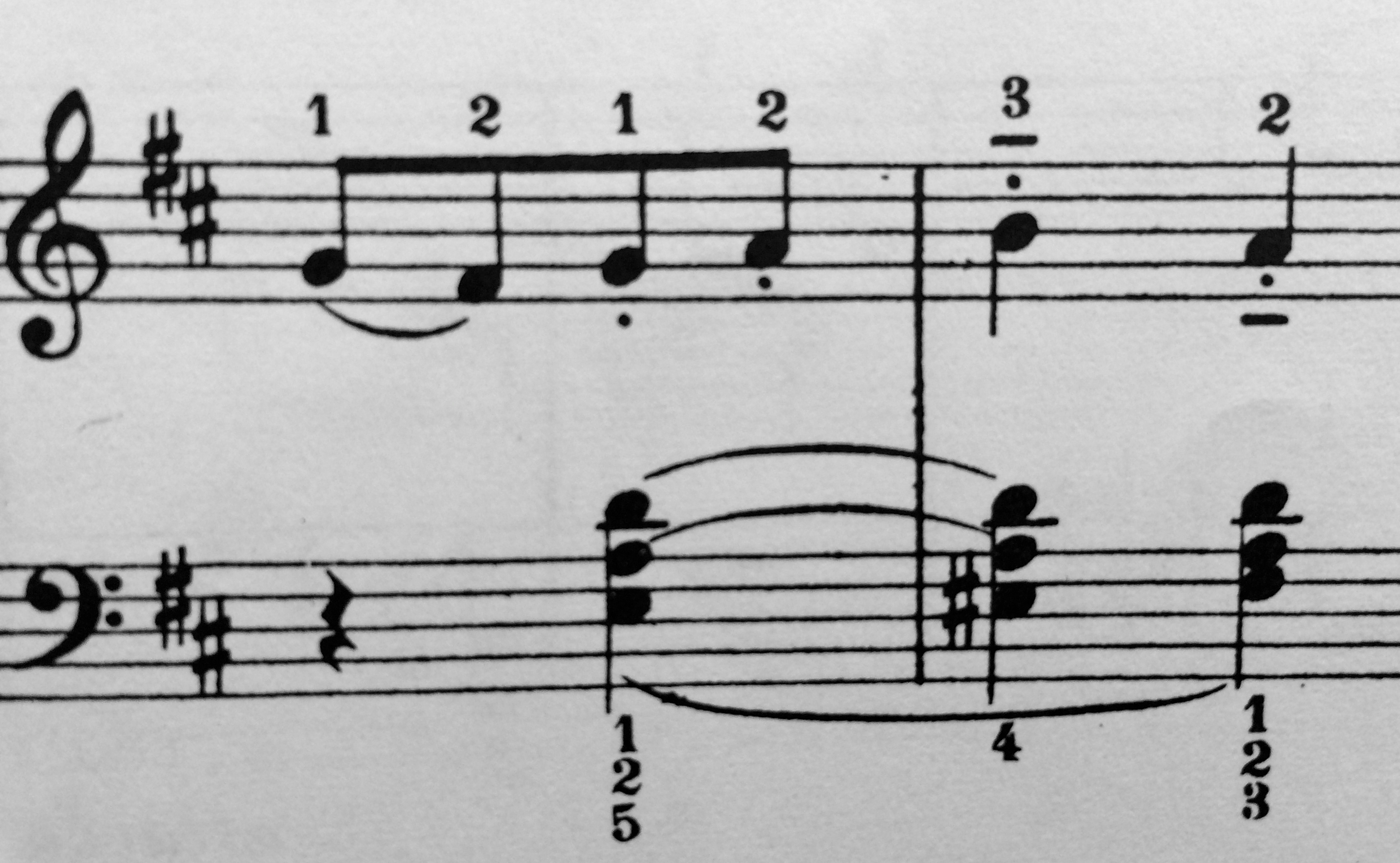
Here’s a statement that appears out of the blue and not at all linked to the previous melody:

Measures 5 -6

Measures 5 -6

Unique Aspect:  I’m beginning to notice how Bartok often uses his main theme, or portion thereof, as his conclusion to a piece.

Correlated To:  Faber Piano Adventures, Level 3A or later; student should be familiar with alternating-finger staccato and dotted rhythms; a strong sense of rhythmic division is necessary and a hand span of a 7th

No. 15  – Untitled (Allegro moderato)

Of Nos. 11- 15, this one is the most often played. 

The Expressive Idea:  Lots of graceful, cheerful humor here. This piece contains the same off-beat accompaniment in the LH as in No. 5, which gives it a nice romp. However…. notice how Bartok uses a quiet dynamic (P) and leggiero for every entrance of the theme therefore informing us not to give it too much “romp.”

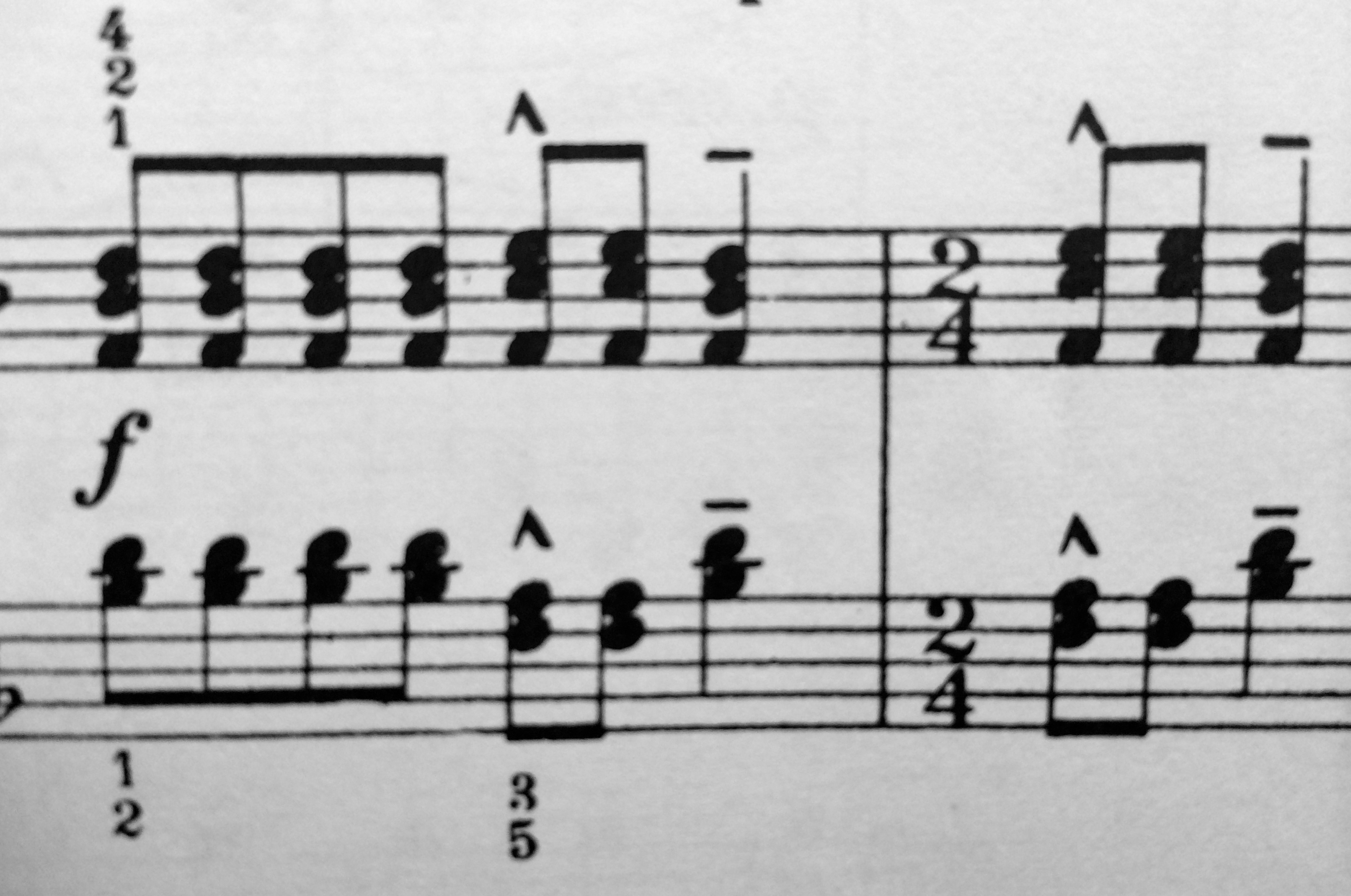
Technical Challenges:  Though I categorize this piece as late elementary in level, those with small hands need to beware of the use of harmonic 7ths in the LH, especially 7ths with a note within such as this one:

LH span in measures

LH span in Measures 7-8

Unique Aspects:  This piece is created simply from two 4-mm. phrases which Bartok manipulates through tempo and/or harmonization.  At this point in the Play-Along, I’m beginning to notice Bartok’s affinity for entrances on off-beats, especially in the LH.

Correlated To:  Faber Piano Adventures, mid-to-late 2B, and small hands will need to be able to reach a 7th.

No. 12 is a new favorite for me.  What’s yours?

Related Posts Plugin for WordPress, Blogger...